Knowledge Base / Why Scrum? / Waste reduction
Develop the product based on its own use
In 2002, the president of the Standish Group, a recognized North American research group, presented the results of a limited study at a conference in Italy which showed that 64% of the features present in software products were never or rarely used (see the figure below). While the origins of these numbers are unclear, the study has come to be widely referenced and for that reason I present it here.
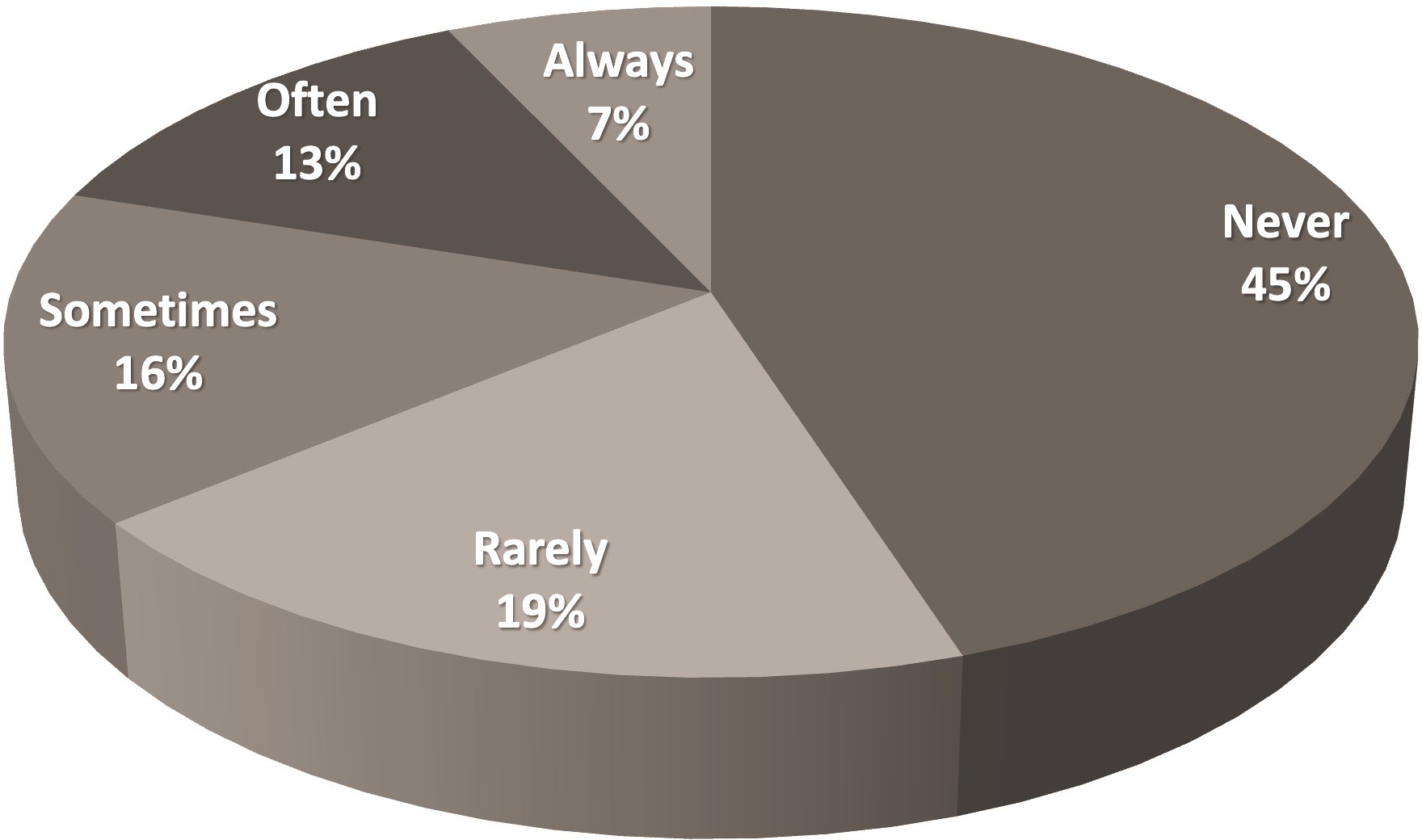
I also mentioned earlier a 2001 study that shows that no less than 80% of the features implemented in software projects was pure waste. And to make things worse, this same study shows that only between one in ten and one in one hundred lines of code produced were actually delivered, varying with the complexity and size of the project (COHEN et al., 2001). These numbers show a gigantic waste generated in software development.
In Scrum work, however, the product emerges and is delivered during its development to whoever will use it, instead of having its details defined at the beginning. Defining how the product will evolve – that is, what will be done next – is mainly based on feedback and metrics from the use of what has already been delivered. Thus, the actual product development work is ordered and conducted according to the needs of customers and users, with the delivered parts of the product then being used.
While there is some waste, as done parts of the product will be modified based on the feedback and usage metrics, it is not comparable to the waste generated when we try to predict the details in advance.